APW Elementary

APW Elementary
Rebel Pride Starts Inside

Wednesday, September 25, 2019

Day 16: 9/25/19 - D Day: Plot Line & Freak the Mighty Ch 14 & 15

Good Morning 6th Graders,
          Today is a 'D' Day. Make sure you use the bathroom & sharpen your pencils. Check to see that you have everything you need for your morning classes. 
                                Thank you
                                Mr. Trumble
ELA:
Do Now:
  • Write tonight's homework down in your agenda
  • Pick up a Plot line and glue it into your notebook on the very next page
Homework: 
  • Finish reading and annotating Ch 14 & 15 
  • Complete the Cornell Notes

Activity #1
Elements of Plot

Standards:
RL6.3 - Describe how a particular story's plot unfolds in a series of episodes as well as how characters respond or change as the plot moves toward a resolution

Directions:
Work with your small group to fill in the plot line with the appropriate information from Freak the Mighty. Use pencil so we can make corrections.

Fill in:
  • Title & Author
  • Point of view
  • Exposition
  • Inciting Incident

Activity #2
Read Aloud
Freak the Mighty: Chapters 14 & 15

Standards
RL6.1 - Making Inferences and using evidence to support your thinking
RL6.3 - Describe how a story, or plot, unfolds in a series of events, including how the characters respond or change

Reading Strategy - Annotating a Text & Summarizing
While you read it is important to annotate what you are reading. This will allow you to comprehend what you are reading and make more accurate inferences about the reading.
  1. Figurative Language
  2. Characterization
  3. Setting
  4. Plot
Ch 12
  • p. 73 How does Max feel about his father? What's your evidence?
  • p. 76 Analyze the events on page 76 when Max's classmates are calling him Names. Is this an example of Bullying? How do the students' actions and words demonstrate intolerance?
  • p. 77 What does Kevin mean by his response to his teacher's question, "You must be Kevin, is that right?"
  • p. 78 What does Max's posture tell you about his thoughts?
Ch13

  • p. 81 Evaluate: Why do you think Max doesn't talk in class?
  • *Analyze Kevin's words about reading and writing on pg 82.*
  • p. Do you think Max's plan to run away if they put him in the learning disabled class is a good one? Why or Why not?
  • p. 86 How does the author build suspense on top of page 86?
  • p. 86 How do you think Max feels when Kevin has his incident in the cafeteria. Support your thinking with evidence.
  • p. 87 What action on page 87 contributes to the theme of trust and friendship? How?
Ch14
  • pg 88 - Evaluate: Why do you think Kevin uses his imagination so much regarding his disability?
  • pg 89 - Evaluate: How does Kevin sharing the news about growing on the inside but not on the outside add to the theme of trust and friendship?
  • What conflicts have you identified for Max and Kevin?
    What evidence can you use to support your thinking?
  • pg 90 - Assess Grim's plan to protect Max from Killer Kane? Do you think it's a good plan? What could go wrong? What are Grim's other options? 
  • Pg 91-92 - Analyze Max's feelings when he finds out his dad is up for parole. How do you know? What is your evidence?
  • What conflicts have you identified for Max and Kevin?
    What evidence can you use to support your thinking?
Ch 15 - What Came Down the Chimney
Pg 95 - Critique: What does Grim say the difference is between telling tales and telling lies? Do you agree with him?
Evaluate: How do Gram's actions help you understand the kind of person she is?

Pg 96-98 - Critique: How does Max feel about Kevin's Christmas gift? What's your evidence? 

pg 99 - Assess: Why do you think Max's dad came back?
How would you feel if you were in Max's position?
What would you do?

Essential Question: What inferences can I make about the Characters & the important Plot events of Freak the Mighty?

Focus: What are the most important plot events?
RTI
Read Aloud
Freak the Mighty: Chapters 14 & 15

Standards
RL6.1 - Making Inferences and using evidence to support your thinking
RL6.3 - Describe how a story, or plot, unfolds in a series of events, including how the characters respond or change

Reading Strategy - Annotating a Text & Summarizing
While you read it is important to annotate what you are reading. This will allow you to comprehend what you are reading and make more accurate inferences about the reading.
  1. Figurative Language
  2. Characterization
  3. Setting
  4. Plot
  5. Themes
  6. Conflicts

Tuesday, September 24, 2019

Day 15 : 9/24/19 - C Day: Elements of Plot & Freak the Mighty Ch 12 & 13

Good day 6th Graders,
          Today is a 'C' Day. Make sure you use the bathroom & sharpen your pencils. Check to see that you have everything you need for your morning classes. 
                                Thank you
                                Mr. Trumble
ELA:
Do Now:

  1. Write tonight's homework down in your agenda
  2. Hand in your Vocabulary Homework to the red bin
  3. Pick up a copy of "The Elements of Plot" and Cut and glue it in to your notebook. (See my example)

Homework: 
  • Finish reading Ch 12 & 13 
  • Complete the Cornell Notes - You must complete all sections of the Cornell Notes. 
(Tuesday, September 24th)
8:55 – 9:35 Specials
9:38 – 10:15ish Block 1 and to chat with our homeroom about proper etiquette at a performance etc.
10:15 – 10:20 Travel to HS
10:30 – 11:30ish Performance at HS
11:30 – 11:40ish Travel back from HS
11:45ish – 12:21ish Lunch for our kids (If the cafeteria has Mullin, Faulkner, Holmes, and Trumble will be bringing their kids back to our homerooms to eat so as to not overcrowd the cafeteria)
12:24 – 12:50 Block 2
12:53 – 1:19 Block 3
1:22 – 1:48 Block 4
1:51 – 2:21 RTI 1
2:24 – 2:54 RTI 2
2:57 – 3:17 DIRT/HR/CT

Activity #1
Elements of Plot

Standards:
RL6.3 - Describe how a particular story's plot unfolds in a series of episodes as well as how characters respond or change as the plot moves toward a resolution

Notes:
Cut the Elements of Plot Ladder (See Example)
Glue in the Plot Ladder ( See Example)

9/26                    The Elements of Plot

  • The main events, or story sequence, in a literary work, book, movie, or play.
Exposition
  • Introduces the main characters (Protagonist) setting, & basic situations
    • Vocabulary: Protagonist = the main character
Inciting Incident (Starting Event)
  • The event that sets the story in motion- makes the rest of the story possible
    • Vocabulary: Incite = to start
Rising Action
  • Largest part of the story
  • Complications & obstacles arise that move the plot along
Climax
  • The most intense & exciting part of the story between the protagonist & the antagonist
    • Vocabulary: Antagonist = the person, or force, in conflict with the protagonist
Falling Action
  • Events that follow the climax which start to resolve conflicts
Resolution
  • The End of the story when conflicts are resolved for the protagonist
    • Vocabulary: Resolve = to find a solution, to bring to an end
Tomorrow we will use this information to see how Rodman Philbrick uses these elements of plot to craft the story, Freak the Mighty

Activity #2
Read Aloud
Freak the Mighty: Chapters 12 & 13

Standards
RL6.1 - Making Inferences and using evidence to support your thinking
RL6.3 - Describe how a story, or plot, unfolds in a series of events, including how the characters respond or change

Reading Strategy - Annotating a Text & Summarizing
While you read it is important to annotate what you are reading. This will allow you to comprehend what you are reading and make more accurate inferences about the reading.
  1. Figurative Language
  2. Characterization
  3. Setting
  4. Plot
  5. Themes
  6. Conflicts
Essential Question: What inferences can I make about the Characters & the important Plot events of Freak the Mighty?

Focus: What are the most important plot events?

Ch 12
  • p. 73 How does Max feel about his father? What's your evidence?
  • p. 76 Analyze the events on page 76 when Max's classmates are calling him Names. Is this an example of Bullying? How do the students' actions and words demonstrate intolerance?
  • p. 77 What does Kevin mean by his response to his teacher's question, "You must be Kevin, is that right?"
  • p. 78 What does Max's posture tell you about his thoughts?
Ch13
  • p. 81 Evaluate: Why do you think Max doesn't talk in class?
  • *Analyze Kevin's words about reading and writing on pg 82.*
  • p. Do you think Max's plan to run away if they put him in the learning disabled class is a good one? Why or Why not?
  • p. 86 How does the author build suspense on top of page 86?
  • What conflicts have you identified for Max and Kevin?
    What evidence can you use to support your thinking?
  • p. 86 How do you think Max feels when Kevin has his incident in the cafeteria. Support your thinking with evidence.
  • p. 87 What action on page 87 contributes to the theme of trust and friendship? How?
  • What conflicts have you identified for Max and Kevin?
    What evidence can you use to support your thinking?
RTI - C day
Read Aloud
Freak the Mighty: Chapters 12 & 13

Standards
RL6.1 - Making Inferences and using evidence to support your thinking
RL6.3 - Describe how a story, or plot, unfolds in a series of events, including how the characters respond or change

Reading Strategy - Annotating a Text & Summarizing
While you read it is important to annotate what you are reading. This will allow you to comprehend what you are reading and make more accurate inferences about the reading.
  1. Figurative Language
  2. Characterization
  3. Setting
  4. Plot
  5. Themes
  6. Conflicts

Monday, September 23, 2019

Day 14: 9/23/19 - B Day: Ch 6 - 10 Comprehension Check & Evaluating Written Responses

Good Morning 6th Graders,
          Today is a 'B' Day. Make sure you use the bathroom & sharpen your pencils. 
                                Thank you
                                Mr. Trumble
ELA:
Do Now:
  • Place your compare/contrast HW on your desk so I can check it
  • Write tonight's homework down in your agenda
  • Pick up a quiz from the music stand
Homework: 
  • Finish reading Ch 11 & Complete Cornell Notes
  • Take Home Vocabulary Assessment 
Activity #1
Quick Comprehension Check
AKA: a Quiz
Directions:
Multiple Choice: Questions 1 - 5: Be sure to write the letter of your answer choice on the line provided (1 point each)

Fill in the blank: Questions 6 - 10:  Identify which character is speaking in each quote. (1 point each)


Short Answer: Pick just 1. Answer in complete sentences and use evidence from the text. (4 Points)

When you finish hand in your quiz to the red bin, and pick up the vocabulary matching activity. You may use your phone or a dictionary to help you figure out each vocabulary word.


Activity #2
Evaluating Written responses
Standards:
SL6.1 - Engage effectively in a range of collaborative discussions with diverse partners on grade 6 topics.
W6.5 - With guidance and support from peers and adults, develop and strengthen writing as needed by planning, revising, editing, rewriting, and trying new approaches.

Purpose:
Today you will not be handing in your written responses to the compare contrast questions. Instead you will be working in a small group to evaluate your written responses. You should compare your responses to the examples given to you by the teacher. 

Directions:
  • Work with the members of your small group.
  • Take turns reading your responses
  • Use the scoring guide below to evaluate each answer. 
  • Each response is worth 8 points. 
Scoring should be:
  1. Intro - 1 point
  2. Details - 1 point
  3. Evidence - 1 point
  4. Reflection - 1 point
  5. Elaboration - 1 point
  6. Spelling - 1 point
  7. Grammar - 1 point
  8. Mechanics/Conventions - 1 point
Total score = __/8
Next week  you will be handing in your written responses to be scored by me. This is your opportunity to evaluate your own writing, see what you do well, see what you need to improve, and make the necessary improvements. 


Example:

          There are many similarities between the book, “Freak the Mighty” and the movie, “The Mighty”. The first similarity worth noting is the way the characters are portrayed and developed throughout the story. In the book and in the movie Max feels like he does not have a brain until Freak comes along.  Kevin is super smart and he talks like a dictionary in the film and in the novel. He is also still battling a physical disability and has to use crutches. Another similarity is the plot event where the boys go to the fireworks and millpond. In both the story and the movie Kevin acts as the brain telling Max what to do, and Max acts as the body carrying Kevin. I think the movie does a good job of recreating the novel for movie goers. If you like the book, you will probably enjoy the film.


          There are many differences between the book, “Freak the Mighty” and the movie, “The Mighty”. The first major difference between the book and the movie is the way Max and Kevin’s friendship begins. In the book their friendship begins when Max helps Kevin get a toy ornithopter out of a tree.  It is this small act of kindness that starts their friendship in the novel, but in the movie their friendship starts when Kevin becomes Max’s tutor. Kevin then gives Max money to take him to the fireworks. Another difference between the two is the setting. When reading the book I picture a small run down town, and in the movie the setting is a large heavy populated city. In my opinion the book does a better job telling the story of Max and Kevin becoming Freak the Mighty, so I recommend reading the book before watching the movie. 


Activity #3
&
RTI
Read Aloud
Freak the Mighty: Chapters 11

Standards
RL6.1 - Making Inferences and using evidence to support your thinking
RL6.3 - Describe how a story, or plot, unfolds in a series of events, including how the characters respond or change

Reading Strategy - Annotating a Text & Summarizing
While you read it is important to annotate what you are reading. This will allow you to comprehend what you are reading and make more accurate inferences about the reading.
  • Use Cornell Notes to record important information or questions you have while reading. Notes could be about:
  1. Figurative Language
  2. Characterization
  3. Setting
  4. Plot
  5. Conflicts


Friday, September 20, 2019

Day 13: 9/20/19 - A Day: Freak the Mighty Movie - Compare/Contrast the book & the Movie

Good Morning 6th Graders,
          Today is an 'A' Day. Make sure you use the bathroom & sharpen your pencils. Check to see that you have everything you need for your morning classes. 
                                Thank you
                                Mr. Trumble
ELA:
Do Now:
  • Write tonight's homework down in your agenda
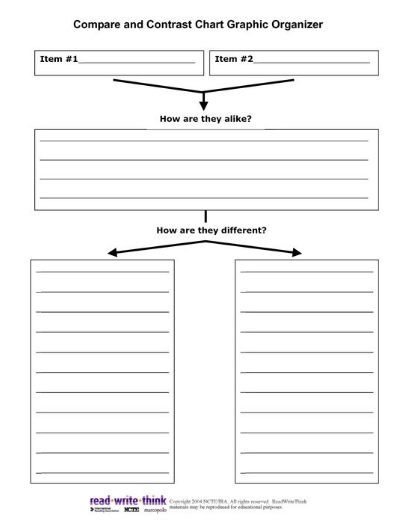
  • Pick up a Compare/Contrast Graphic Organizer
  • Pick up the compare/contrast mini essay HW sheet
Homework: 
  • Complete the 2 paragraph Compare/Contrast Mini-essay

Activity #1
Movie - Freak the Mighty (Part 1)

Standards:
RL6.7 - Compare & Contrast the experience of reading a story to viewing a video, including contrasting what you "see" or "hear" when reading the text to what you perceive when you view the movie.

Directions:
As you watch the first part of the movie record information in the graphic organizer to track the similarities and differences. You will use this information to help you create written responses comparing and contrasting the similarities and differences between the book and the movie.

Important:

  • Focus on the Literary Elements we have studied when thinking about the similarities and differences.
  • Characterization - Are the characters developed in the movie the same as the book?
  • Setting - How do the settings compare? Include the way you envisioned the setting in the book to what you see in the movie.
  • Point of View - Does the movie use the same point of view as the book?
  • Plot - How do the events in the movie compare to the events in the book? Focus on the larger more important events and not the small insignificant details.


Writing Strategy - Constructing a written response with:
an 
  1. Introduction
  2. Details (about both the book and movie)
  3. Evidence (from both the book and movie)
  4. Reflection/Conclusion
Many times you will need additional Details & Evidence so the format of your essay might look like this:
I                                    I
D                                   D
E                                   D
D          Or                     D
E         This                   E
D                                   E
E                                   E
R                                   R

RTI
Analysis of Similarities & Differences
Drafting paragraphs to write about similarities & Differences between the book & the Movie


Standards
W6.4 - Produce clear and coherent writing in which the development, organization, and style are appropriate to task, purpose, and audience

Writing Strategy - Constructing a written response with:
an
Introduction
Details
Evidence
Reflection/Conclusion

Example:

          There are many similarities between the book, “Freak the Mighty” and the movie, “The Mighty”. The first similarity worth noting is the way the characters are portrayed and developed throughout the story. In the book and in the movie Max feels like he does not have a brain until Freak comes along.  Kevin is super smart and he talks like a dictionary in the film and in the novel. He is also still battling a physical disability and has to use crutches. Another similarity is the plot event where the boys go to the fireworks and millpond. In both the story and the movie Kevin acts as the brain telling Max what to do, and Max acts as the body carrying Kevin. I think the movie does a good job of recreating the novel for movie goers. If you like the book, you will probably enjoy the film.

          There are many differences between the book, “Freak the Mighty” and the movie, “The Mighty”. The first major difference between the book and the movie is the way Max and Kevin’s friendship begins. In the book their friendship begins when Max helps Kevin get a toy ornithopter out of a tree.  It is this small act of kindness that starts their friendship in the novel, but in the movie their friendship starts when Kevin becomes Max’s tutor. Kevin then gives Max money to take him to the fireworks. Another difference between the two is the setting. When reading the book I picture a small run down town, and in the movie the setting is a large heavy populated city. In my opinion the book does a better job telling the story of Max and Kevin becoming Freak the Mighty. I recommend reading the book before watching the movie. 

Directions: 


Thursday, September 19, 2019

Day 12: 9/19/19 - D Day: Kidblog - How to Create a Written Response Using Technology

Good Morning 6th Graders,
          Today is a 'D' Day. Make sure you use the bathroom & sharpen your pencils. Check to see that you have everything you need for your morning classes. 
                                Thank you
                                Mr. Trumble
ELA:
Do Now:
  • Hand in the Point of View HW in the Red Bin 
  • Write tonight's homework down in your agenda
  • Login to your computer. 
Homework: 
  • Finish any past due assignments
Activity #1
Kidblog
How to Become a Blogger

Today you will learn to use Technology 
to Create a Written Response to a Text 

*******************
While you are blogging I will be calling you out into the hallway to have you put your shield above your locker, and I will give out any last STAR scores to people who do not have them yet.

Standards:
W6.4 - Produce clear and coherent writing in which the development, organization, and style are appropriate to task, purpose, and audience.
W6.6 - Use technology including the internet, to produce and publish writing as well as to interact and collaborate with others; demonstrate sufficient command of keyboarding skills


Part 1: Logging in to Kidblog
1. Log into the computer using your login and password
2. Use Chrome & go to our classroom website
www.roytrumble.blogspot.com
3. Click on the link for ELA Kidblog
3. In the upper right hand corner click on the Log in icon.
4. Scroll down to find your name. They are listed by your first name and the first initial in your last name.
5. Your password is 6 characters long. It is your last name. 

  • If your last name is only 5 characters long, then it is followed by a number 1
  • If it is 4 characters long it is followed by the numbers 12

6. Once you enter your password, it will ask you to create a new password. Create a password that is easy to remember. You will need to write your password down in your agenda for safe keeping.
7. Finish logging in to gain full access to kidblog

Part 2: Creating Your First Blog Post
1. To create a new post click on the blue icon for New Post+ in the upper right corner.
2. Give your post a title: "Prompt # _______ "
10. In the text box type your post, answering the question,  Provide evidence from the text to support your thinking.
11. Be sure to use proper grammar and mechanics, including capitals and punctuation.
12. When you are done responding to the prompt, click on the blue Publish icon.
13. When prompted you may publish your response to the "Class"
14. If you finish you may go back to the homepage of kidblog and you may respond to other student's posts with a question or a comment. or post one of the questions you wrote on your Cornell Notes last night.


Pick a Prompt:
1. Summarize the events of the 4th of July and how Max & Kevin got the name, Freak the Mighty. What inferences can you make about Max & Kevin based on this event?

2. Summarize the Quest for Treasure. What inferences can you make about Max & Kevin based on this event?

***You should use your notes from the readings to help you write your response.


RTI
Kidblog Continued

Wednesday, September 18, 2019

Day 11: 9/18/19 - C Day: Point of View & Freak the Mighty Ch 10

Good Day 6th Graders,
          Today is a 'C' Day. Make sure you use the bathroom & sharpen your pencils. Check to see that you have everything you need.
                                Thank you
                                Mr. Trumble
ELA:
Do Now:
  • Glue in the Point of View worksheet into your Interactive Notebook (Leave room at the top of the page for a few notes)
  • Write your homework down in your agenda
Homework: 
  1. Finish reading Ch  10 
  2. Complete the Point of View Activity & Cornell Notes

Activity #1
Mix & Mingle

  • Today you will learn a new protocol for collaborating with your peers.
  • To begin you will find a partner (1 partner)
  • You will share your response to the first question, and your partner will share their response.
  • You have about 60 seconds to collaborate about your answers and make improvements that you need to.
  • I will blow the train whistle to signal that times it up.
  • When you hear the whistle you will find a new partner and collaborate about the second question.
  • You will continue in this manner through all of the questions.
  • When you are done discussions each question you will be handing your responses in.

Activity #2
How does an Author Develop Point of View?

Standards:
RL6.6 Explain how an author develops the point of view of the narrator in a text

Notes:
Point of View

  • The perspective (or window) of the person telling the story
  • Tells the reader who the narrator is


Activity #3
Freak the Mighty: Chapters 10
Applying the 4 C's of 21st Century Learning & Accountable Talk Stems to our Small Group Discussions

Standards
RL6.1 - Making Inferences and using evidence to support your thinking
RL6.3 - Describe how a story, or plot, unfolds in a series of events, including how the characters respond or change
RL6.6 Explain how an author develops the point of view of the narrator in a text
Reading Strategy - Annotating a Text
While you read it is important to annotate what you are reading. This will allow you to comprehend what you are reading and make more accurate inferences about the reading.
    Before Reading: (Whole Group)
    Review expectations for small group work

    Directions for Reading: (Small group)
    • Complete the point of View activities
    • Read chapter  10 with the members of your small group
    • Annotate the text as you read (6-7 annotations) Using the Cornell Note taking structure 
    • Write 3- 4 questions
    Essential Question: What inferences can you make about the characters, setting, and plot event?


    Key Questions:
    1. Kevin tells Max he that the treasure, hidden in the storm drain, "has been confirmed by visual observation." What is visual observation? 
    2. What does the way Kevin speaks tell you about his personality? Rewrite the sentence as Max would say it. How would you say it?
    3. Can you summarize the events of the "Quest for Treasure" in this chapter?


    RTI
    Small group Reading & Reading Closely
    Determining the Point of View

    Standards
    RL6.6 Explain how an author develops the point of view of the narrator in a text

    Tuesday, September 17, 2019

    Day 10: 9/17/19 - B Day: The 4 C's of 21st Century Learning, Accountable Talk & Freak Mighty Ch 8 & 9

    Good Morning 6th Graders,
              Today is a 'B' Day. Make sure you use the bathroom & sharpen your pencils. Check to see that you have everything you need for your morning classes. 
                                    Thank you
                                    Mr. Trumble

    Do Now:
    • Glue in the 4 C's, Discussion Sentence Starters, & Accountable talk printables on the next blank page in your Interactive Notebook
    • Write your homework down in your agenda
    Homework: 
    • Finish reading and annotating Ch 8 & 9 
    • Complete the Comprehension questions for ch 8 & 9


    Activity #1
    How do we work together in small group?

    Standards:
    SL6.1 Engage effectively in a range of collaborative discussions with diverse partners on grade 6 topics, texts, & issues, building on others' ideas and expressing my own ideas clearly

    I-Chart for small group & Infependent work
    What are the classroom expectations when you work independently, or in a small group.

    Make I chart

    Student
    Start Right away
    Sit Quietly
    Stay in 1 spot
    Remain on task
    Work the whole time
    Do not interrupt others
    Build stamina

    Teacher
    Monitor students
    Provide feedback
    Hold student/teacher conferences
    Meet with small groups
    Work 1 on 1 w/a student


    Activity #2
    Freak the Mighty: Chapters 8 & 9
    Applying the 4 C's of 21st Century Learning & Accountable Talk Stems to our Small Group Discussions

    Standards
    RL6.1 - Making Inferences and using evidence to support your thinking
    RL6.3 - Describe how a story, or plot, unfolds in a series of events, including how the characters respond or change
      Before Reading: (Whole Group)
      Review expectations for small group work

      Directions for Reading: (Small group)
      • Read chapter 8 & 9 with the members of your small group
      • Complete the comprehension questions for chapters 8 & 9


      Key Questions:
      Ch 8.
      1. Why does Max think Kevin rescued him, rather than the other way around?
      2. Who rescued who? Why do you think that way?
      3. Analyze how Grim & Gram treat Max after the rescue on the 4th of July? What inferences can you make?
      Ch 9
      1. Pick 3 passages that help develop the motif of quests, knights, and the legends of King Arthur.
      2. How does Kevin sharing information about the Medical research facility build the theme of trust and friendship?
      3. How does Kevin react when Max says he is worried about the pain Kevin will go through getting a new body?
      4. Foreshadowing is a clue or hint about what will happen in later in the story. What do you think is being foreshadowed in ch 9? Explain your thinking.


      RTI
      Small group Reading & Reading Closely to answer Comprehension Questions using Complete Sentences

      Standards
      RL6.1 - Making Inferences and using evidence to support your thinking
      RL6.2 - Determine how a theme is conveyed through details, and provide a summary of a text

      Reading Strategy - Annotating a Text
      While you read it is important to annotate what you are reading. This will allow you to comprehend what you are reading and make more accurate inferences about the reading.
      • Use sticky notes to record important information or questions you have while reading.