APW Elementary

APW Elementary
Rebel Pride Starts Inside

Tuesday, October 8, 2019

Day 25: 10/8/19 - A Day: Analyzing Theme

Good Morning 6th Graders,
          Today is an 'A' Day. Make sure you use the bathroom & sharpen your pencils. 
                                Thank you
                                Mr. Trumble
ELA:
Do Now:
  • Write tonight's homework down in your agenda
  • Pick up a Theme Tree & glue it on to the very next page in your ELA Notebook
Homework: 
  • Complete Theme Analysis Graphic Organizer for Freak the Mighty

Activity #1
Identifying Theme
Standards 
  • RL6.2 Determine a theme, and how it is conveyed through particular details. 
Review Notes  & New Vocabulary:
What is "Theme"?
Many people confuse "Theme" & "Subject"


Difference Between a Theme and a Subject

Subject is a topic that is found in a literary work, while a theme is an opinion or statement expressed on the subject that the reader can apply to their own life.

For example:
The subject of courage 
Theme = Courage comes in all sizes. 
or 
It takes courage to overcome obstacles in life.

It is up to the reader to determine the theme of a literary work by analyzing the characters, conflicts, and plot.

We can...
  1. identify the topics within a short video clip.
  2. select evidence to help us determine a theme
  3. determine a theme.
Directions for whole group: While you watch Christian the Lion:
1. Use your notes from yesterday to begin thinking about what topics you see
2. Write the topics on the trunk

Vocabulary to know prior to watching
Harrods = exotic pet shop
Vicar = a representative from the church
Flat = apartment
Undaunted = not discouraged by difficulty or danger

After watching:
3. Write the details/text evidence from the video on the leaves.
4. Connect the topics with the details to determine a theme.


Activity #2
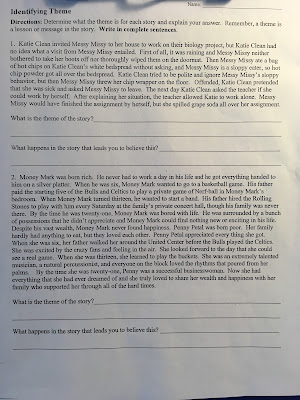
Now it's your turn to Analyze Theme

Standards 
  • RL6.2 Determine a theme, and how it is conveyed through particular details. 
Work with your small group to complete the following practice


I Can...
  1. determine a theme of a short story.
  2. select evidence to support my reasoning.
Directions:
  • Pick whichever passages you want
  • Read the passage out loud with your group
  • Collaborate about the topics within each.
  • Determine what you think the theme is and record your response on the line provided.
  • Support your thinking with evidence from the text. 
  • Complete as many as you can, but work carefully.
  • You will hand in your work as a classwork grade.
Responses will be scored using a 4 point scale for each response completed.
  • 2 points for each valid theme written correctly in a complete sentence.
  • 2 points for identifying relevant evidence written in complete sentences.
Review I-Chart Expectations for Small Group Work


Homework:
Complete the Theme Tree Graphic Organizer using Freak the Mighty.
1. Write topics on the trunk of the tree
2. Write your evidence on the leaves (there is room for 3-4 pieces of evidence from the text. These may be in your own words, or direct quotes)
3. Write the theme on the lines.


RTI - D day
Closer Analysis of Theme
Standards 
  • RL6.2 Determine a theme, and how it is conveyed through particular details. 

    Directions:
    1. Today we will be working in small groups to practice identifying a Theme within a text


    Monday, October 7, 2019

    Day 24: 10/7/19 - D Day: Types of Characters, Ch 24 & 25, & Intro to Theme

    Good Morning 6th Graders,
              Today is a 'D' Day. Make sure you use the bathroom & sharpen your pencils. 
                                  Thank you
                                    Mr. Trumble
    Do Now: 
    • Write tonight's homework down in your agenda
    • Pick up a copy of the Types of Character notes and a copy of the Character Sorting sheet.
    • Glue these into your notebook on the next available pages
    Homework: 
    • Finish reading Ch 24 & 25
    • Complete the Cornell Notes
      • Focus on asking level 1, 2, # 3 Questions

    Activity #1
    Evaluating the different Types of Characters
    Standards:
    RL6.3 Describe how a story's plot unfolds in a series of events, as well as how characters respond or change as the plot moves toward a resolution.

    I can...
    1. sort characters from Freak the Mighty to determine what type of character they are.


    Notes:
    *Use 4 different colored highlighters to highlight the 4 categories for sorting characters

    10/9                   The Types of Characters

    1A. Protagonist: The Main Characters
    1B. Antagonist: The character/Force in Conflict with the protagonist

    2A. Flat Character: You do no know them well
    2B. Round Character: You know a lot about them

    3A. Static Character: Stays the same
    3B. Dynamic Character: Undergoes an important inner change

    4A. Sympathetic Character: A character whose situation you understand and can relate to
    4B. Minor Character: A Character mentioned only briefly (even less than a flat character)

    Small Group Work:
    Work with your FTM Groups & use the notes for the different types of characters to fill out the sorting characters graphic organizer. I have already listed all the characters from the novel. 

    Activity #2
    Notes on Theme
    I Can...
    1. get a basic understanding of theme to prepare myself to analyze how theme is developed. 

    • Theme is an idea in a literary work
    • Statement that provides an insight into how the world works
    • Similar to a moral or lesson
    • Recurs throughout the piece of literature

    Tomorrow we will be watching a video,  reading short stories, and analyzing the themes presented in them.

    Activity #3
    Whole Group Read Aloud
    Freak the Mighty: Chapters 24 & 25


    Standards
    RL6.1 - Making Inferences and using evidence to support your thinking
    RL6.3 - Describe how a story, or plot, unfolds in a series of events, including how the characters respond or change

    Reading Strategy - Annotating a Text & Summarizing
    While you read it is important to annotate what you are reading. This will allow you to comprehend what you are reading and make more accurate inferences about the reading.
    1. Figurative Language
    2. Characterization
    3. Setting
    4. Plot
    5. Themes
    6. Conflicts
      Essential Question:
      How has Max changed from the beginning of the book?
      RTI - A day
      Read Aloud
      Freak the Mighty: Chapters 24 & 25

      Standards
      RL6.1 - Making Inferences and using evidence to support your thinking
      RL6.3 - Describe how a story, or plot, unfolds in a series of events, including how the characters respond or change

      Reading Strategies - 
      Annotating a Text, Summarizing, & Questioning

      While you read it is important to annotate what you are reading. This will allow you to comprehend what you are reading and make more accurate inferences about the reading.
      1. Figurative Language
      2. Characterization
      3. Setting
      4. Plot
      5. Themes
      6. Conflicts
      7. Mood
      8. Tone

      Friday, October 4, 2019

      Day 23: 10/4/19 - C Day: Identifying Conflicts within a Text, Plot Lines, & FTM Ch 22 & 23

      Good Morning 6th Graders,
                Today is a 'C' Day. Make sure you use the bathroom & sharpen your pencils. 
                                      Thank you
                                      Mr. Trumble
      ELA:
      Do Now:
      • Write tonight's homework down in your agenda
      • Pick up a "What Type of Conflict" Worksheet and preview it independently
      Homework: 
      • Finish reading FTM Ch 22 & 23 
      • Complete Cornell Notes 

      Hello 6th Graders, 
                I hope you have all had a great week, and that you enjoyed learning about conflict. I miss you all, and I want to remind you to work hard for Mrs. Lyng. 
                I am excited to introduce you to little Micah Robert Trumble. He entered this world on Sunday morning at 9:55, and his Mom and I couldn't be any happier! I've already told him all about you guys, and he wants me to tell you that in life, it is important to be smart, but it's even more important to be kind. 
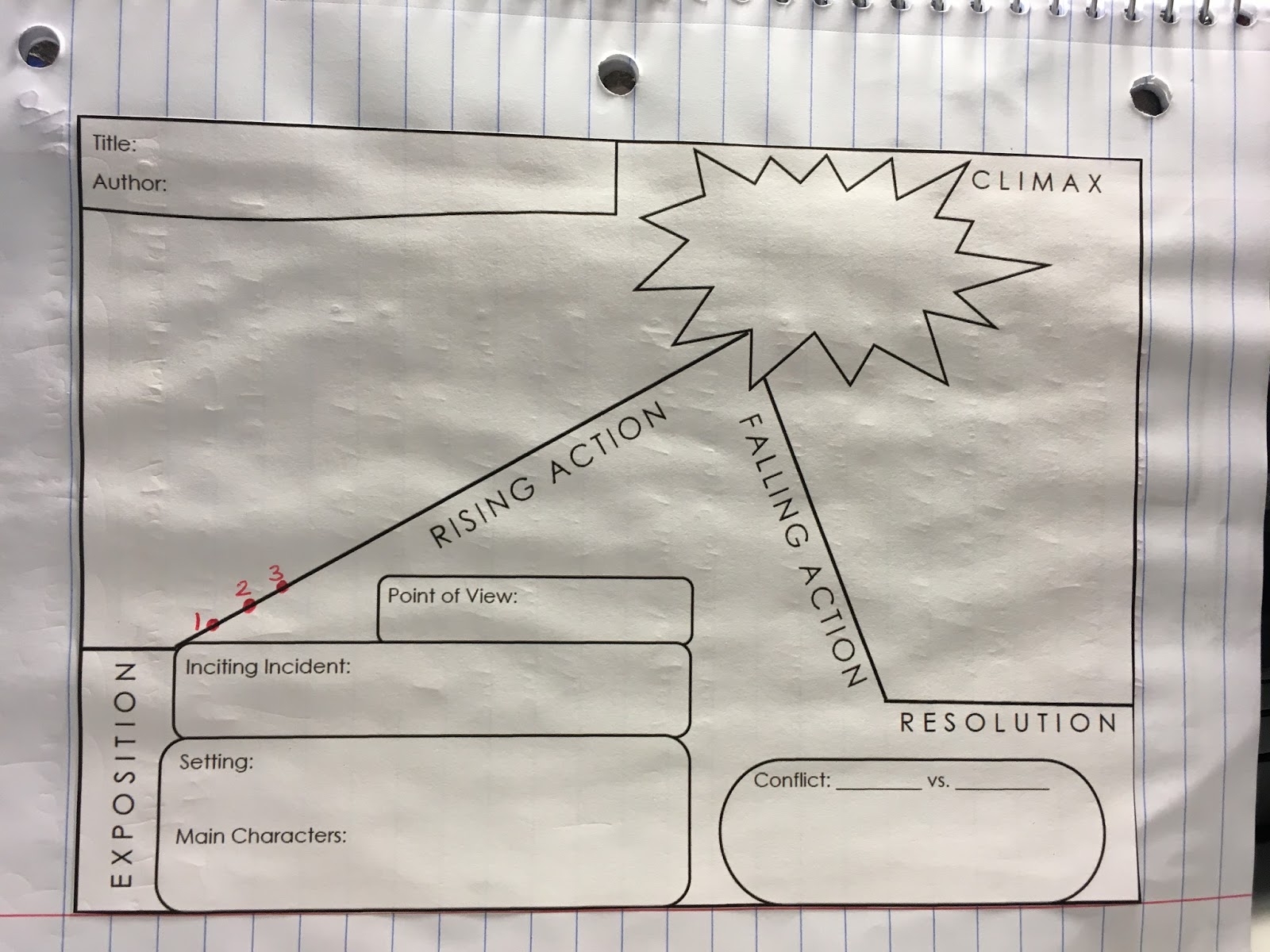
                I hope that you enjoyed reading the climax of Freak the Mighty.  I am amazed that Max could stand up to his father like that. In the Man vs. man conflict between Max and his father, I'd say that Max won!!!! However, I wonder if he will be able to deal with the man vs. self conflict between himself and the way he feels about himself. I can't wait to hear your thoughts on the climax, as well as the falling action. You guys are going to love the end of the book. Some of you might even cry a little. 
              I look forward to seeing you all again in a few weeks. Until then, work hard, be respectful, be responsible, and make sure that whenever possible: Be Kind to each other!

      Activity #1
      Individual Work
      Identifying Conflicts
      STANDARDS:
      • RL6.1 - Cite textual evidence to support analysis of what the text says explicitly as well as inferences drawn from the text.
      I can...
      1. determine what kind of conflict is being described within a short passage.
      2. give an example of each type of conflict within the text Freak the Mighty.

      Directions:
      Part 1 - You must work independently to answer questions 1 - 6. Write the type of conflict on the line provided. 

      Remember:
      "Person vs Person" is the same thing as "Man vs Man"
      "Person vs Nature" is the same thing as "Man vs Nature"
      "Person vs Society" is the same thing as "Man vs Society"
      "Person vs Self" is the same thing as "Man vs Self"


      When you are done you may pick up a copy of the Cornell Notes for chapter 22 & 23 and begin working on them until everyone is done.

      Essential Question: What questions do I have about ch 22 & 23 plot events and what conflicts can I identify?

      1. While you read it is important to annotate what you are reading. (6-8 Annotations)
      2. Use your D.O.K. Stems to help you generate level 1, 2, & 3 questions. (Minimum of 3 questions)
      3. Finish with a 3 - 4 sentence summary.


      Activity #2
      Reading - Small Group
      Freak the Mighty: Chapters 22 & 23

      Standards
      • RL6.1 - Making Inferences and using evidence to support your thinking
      • RL6.3 - Describe how a story, or plot, unfolds in a series of events, including how the characters respond or change

      Reading Strategies: Annotating a Text, Questioning & Summarizing

      Directions:
      1. While you read it is important to annotate what you are reading. (6-8 Annotations)
      2. Use your D.O.K. Stems to help you generate level 1, 2, & 3 questions. (Minimum of 3 questions)
      3. Finish with a 3 - 4 sentence summary.
      Annotations should be about the following:

      1. Figurative Language
      2. Characterization
      3. Setting
      4. Plot Events
      5. Conflicts
      RTI
      Read Aloud
      Freak the Mighty: Chapters 22 & 23

      Standards
      • RL6.1 - Making Inferences and using evidence to support your thinking
      • RL6.3 - Describe how a story, or plot, unfolds in a series of events, including how the characters respond or change

      Reading Strategies: Annotating a Text, Questioning & Summarizing

      Directions:
      1. While you read it is important to annotate what you are reading. (6-8 Annotations)
      2. Use your D.O.K. Stems to help you generate level 1, 2, & 3 questions. (Minimum of 3 questions)
      3. Finish with a 3 - 4 sentence summary.
      Annotations should be about the following:
      1. Figurative Language
      2. Characterization
      3. Setting
      4. Plot Events
      5. Conflicts

      Thursday, October 3, 2019

      Day 22: 10/3/19 - B Day: Mood, Tone & Kidblogging

      Good Morning 6th Graders,
                Today is a 'B' Day. Make sure you use the bathroom & sharpen your pencils. 
                                      Thank you
                                      Mr. Trumble
      ELA:
      Do Now:
      • Write your homework down in your agenda
      • Pick up your Cornell Notes & set them up for tonight's homework
      • Pick up a copy of Mood & Tone, & cut them out. DO NOT GLUE!!!!

      Homework: 
      • Read Ch 21 of FTM & Complete Cornell Notes
        • Focus on writing level 1, 2, & 3 questions & identifying conflicts

      Activity #1
      Set up Cornell Notes for Tonights Reading & whole group discussion about last night's reading

      Essential Question: What inferences can I make about the characters & plot events in chapter 21?


      Activity #2
      Identifying Mood & Tone
      Standard:
      • RL6.4 Analyze the impact of specific word choice on meaning & tone

      Key Question:
      What is the difference between the mood of a text and the tone of a text?

      I can...
      1. explain the difference between the mood & the tone of a text.
      2. describe the mood during the climax of Freak the Mighty.
      3. describe how the author developed the tone during the climax of Freak the Mighty.


      Mood:
      • Reader Centered
      • Influenced by the Setting
      • The overall feeling, or atmosphere, created by a work of literature
      Tone:
      • Writer Centered
      • The attitude a writer takes towards the subject or the reader


      Now it's your turn...

      Activity #3
      Kidblog
      Use Technology to 
      Create a Written Response to a Text 

      Standards:
      RL6.1 - Cite textual evidence to support analysis of what the text says explicitly as well as inferences drawn from the text
      W6.4 - Produce clear and coherent writing in which the development, organization, and style are appropriate to task, purpose, and audience.
      W6.6 - Use technology including the internet, to produce and publish writing as well as to interact and collaborate with others; demonstrate sufficient command of keyboarding skills


      I can...

      1. create a well written Blog Post about a writing prompt of my choosing. 


      Writing Prompt 1:
      One conflict in the novel is a man vs. man conflict between Max and his father Kenny Kane. This conflict is resolved in the events of chapter 19 & 20 during the climax. Use evidence from the text to describe in detail how the author develops the conflict throughout the text including the events of the climax. Include any inferences that you may have made about these events, and reflect on how the author resolves this conflict.

      Writing Prompt 2:
      Identify the mood created during the climax of the text. What tone does the author Rodman Philbrick take toward this part of the novel and how does he develop it. Use evidence from the text to support your thinking. Reflect on the mood & tone during the climax.


      ********************************
      You should try to publish a post before the end of class. If you finish you may respond to other people's posts. Be sure to write everything in complete sentences!
      ********************************


      RTI
      Freak the Mighty - Ch 21
      Small group Reading & Reading Closely
      Cornell Notes
      • What questions did you write for Chapter 19 & 20?
      • What level were those questions?
      • What types of conflicts have you been able to identify for Max & Kevin?
      • How were these conflicts resolved?
      Standards
      RL6.1 - Cite Textual evidence to support analysis of what the text says explicitly as well as inferences drawn from the text.

      RL6.3 Describe how a particular story's plot unfolds in a series of events as well as how the character responds or changes as the plot moves toward a resolution.

      Reading Strategies - 
      Annotating
      Questioning
      Summarizing

      Questioning and summarizing helps us make strong inferences about what we are reading


      Wednesday, October 2, 2019

      Day 21: 10/2/19 - A Day: The 4 Types of Conflict & Freak the Mighty Ch 19 & 20

      Good Morning 6th Graders,
                Today is an 'A' Day. Make sure you use the bathroom & sharpen your pencils. Check to see that you have everything you need for your morning classes. 
                                    Thank you
                                      Mr. Trumble


      ELA:
      Do Now: 
      • Place
         your HW on your desk so I can check it
      • Write tonight's homework down in your agenda
      • Pick up a copy of the Types of Conflict, color code (Optional) it Quickly, and cut out the pieces. (See my example)
        Homework: 
        • Finish reading Ch 19 & 20
        • Complete the Cornell Notes
          • Focus on asking level 1, 2, # 3 Questions & on identifying the types of conflicts the Max and Kevin are going through


        Activity #1
        The 4 Types of Conflict


        I can...
        1. understand the difference between the 4 types of conflict.
        2. identify at least 1 example for each type of conflict in Freak the Mighty.


        Step 1: Label each type of Conflict
        Step 2: Cut out and Glue in the 4 types of conflict to form a square
        Step 3: Write the definition for each type of conflict

        10/4 Conflict

        There are 4 Types of Conflict
        • 1 Internal
        • 3 External


        1. Man vs. Man (External)
        • A struggle, mental or physical, between two characters
        • usually between the Protagonist and an antagonist

        2. Man vs. Nature (External)
        • A struggle between a character and mother nature
        • Mother nature = weather, animals, sickness, etc

        3. Man vs. Society (External)
        • A struggle between a character & the laws or beliefs of a group
        • could involve poverty, politics, social norms, expectations, etc

        4. Man vs. Self (Internal)
        • A struggle between a character and his feelings, conscience, or fear
        Activity #2
        Read Aloud
        Freak the Mighty: Chapters 19 & 20


        Standards
        RL6.1 - Making Inferences and using evidence to support your thinking
        RL6.3 - Describe how a story, or plot, unfolds in a series of events, including how the characters respond or change

        I can...
        1. annotate a text.
        2. write questions to better understand a text.
        3. summarize a text.


        Reading Strategy - Annotating a Text & Summarizing
        While you read it is important to annotate what you are reading. This will allow you to comprehend what you are reading and make more accurate inferences about the reading.
        1. Figurative Language
        2. Characterization
        3. Setting
        4. Plot
        5. Themes
        6. Conflicts
        Before reading: (Small Group)
        Key Questions from Chapter 18
        • Summarize Ch 18(Small Group)
        • What questions did you write about Ch 18? (Small group)
        • What types of conflicts can you identify in this chapter?
        Essential Question: What questions do I have about ch 19 & 20 plot events and what conflicts can I identify?
        RTI
        Read Aloud
        Freak the Mighty: Chapters 19 & 20

        • What questions did you write for Chapter 18?
        • What level were those questions?
        • What types of conflicts have you been able to identify for Max & Kevin?
        Standards
        RL6.1 - Making Inferences and using evidence to support your thinking
        RL6.3 - Describe how a story, or plot, unfolds in a series of events, including how the characters respond or change

        Reading Strategies - 
        Annotating a Text, Summarizing, & Questioning

        While you read it is important to annotate what you are reading. This will allow you to comprehend what you are reading and make more accurate inferences about the reading.
        1. Figurative Language
        2. Characterization
        3. Setting
        4. Plot
        5. Themes
        6. Conflicts

        Tuesday, October 1, 2019

        Day 20: 10/1/19 - D Day: Internal vs. External Conflict & Freak the Mighty Ch 18

        Good Morning 6th Graders,
                  Today is a 'D' Day. Make sure you use the bathroom & sharpen your pencils. 
                                        Thank you
                                        Mr. Trumble
        ELA:
        Do Now:
        • Place your HW on your desk so I can check to see that it is done.
        • Write tonight's homework down in your agenda
        • Pick up a copy of Internal vs External Conflict & Cut them out it. (See my example)
          • You may color code it if there is time, or on your own time.
        Homework: 
        • Finish reading Ch 18
        • Complete the Cornell Notes
          • Focus on asking level 1, 2, # 3 Questions & on identifying the types of conflicts the Max and Kevin are going through


        Activity #1
        Internal Vs. External Conflict
        • RL6.2 Determine a Central Idea of a text and how it is conveyed through details
        I can...
        1. understand the difference between an internal and an external conflict.
        2. identify some of the internal and some of the external conflicts in Freak the Mighty.


        Date__________      Conflict
        Conflict = a struggle between opposing forces or characters
        • without conflict the story would be Boring
        • Conflicts can be internal or external
        • A story can have several conflicts
        • the main conflict is central to the plot & is usually resolved at the resolution
        What are some examples of internal Conflicts?
        What are some examples of external Conflicts?


        Activity #2
        Read Aloud
        Freak the Mighty: Chapters 18

        Standards
        RL6.1 - Making Inferences and using evidence to support your thinking
        RL6.3 - Describe how a story, or plot, unfolds in a series of events, including how the characters respond or change

        Reading Strategy - Annotating a Text & Summarizing
        While you read it is important to annotate what you are reading. This will allow you to comprehend what you are reading and make more accurate inferences about the reading.
        1. Figurative Language
        2. Characterization
        3. Setting
        4. Plot
        5. Themes
        6. Conflicts
        Key Questions from Chapter 17
        • Summarize Ch 17 (Small Group)
        • What questions did you write about Ch 17? (Small group)
        • Infer how Iggy got the apartment for Kenny Kane?
        • Do you think Max's dad really sent him letters and gifts from prison?
        • Do you think Max's dad actually killed Annie? What evidence from the text can you use to support your thinking?
        • What types of conflicts can you identify in this chapter?

        Essential Question: What inferences and questions do I have about the Characters & the important Plot events of Freak the Mighty?

        RTI
        Practice Analyzing Conflict
        & then
        Read Aloud
        Freak the Mighty: Chapters 18

        • What questions did you write for Chapter 17?
        • What level were those questions?
        • What types of conflicts have you been able to identify for Max & Kevin?

        Standards
        RL6.1 - Making Inferences and using evidence to support your thinking
        RL6.3 - Describe how a story, or plot, unfolds in a series of events, including how the characters respond or change

        Reading Strategies - 
        Annotating a Text, Summarizing, & Questioning

        While you read it is important to annotate what you are reading. This will allow you to comprehend what you are reading and make more accurate inferences about the reading.
        1. Figurative Language
        2. Characterization
        3. Setting
        4. Plot
        5. Themes
        6. Conflicts
        • What questions did you write for Chapter 17?
        • What level were those questions?
        • What types of conflicts have you been able to identify for Max & Kevin?